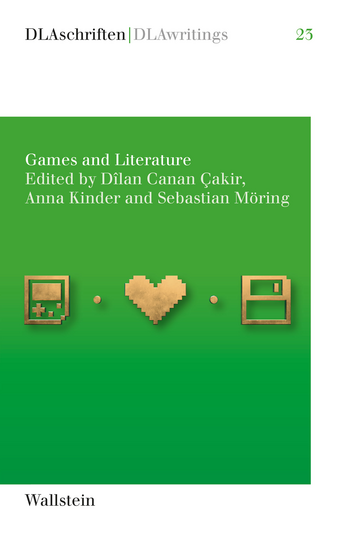

The starting point for answering this question is the distinction between functional and critical game literacy: on the one hand, it describes ‘reading’ games as a semiotic and systemic competence (understanding signs, interfaces, rules, feedback); on the other, as the ability to interpret games as cultural artefacts (including procedural rhetoric and ‘mechanics as metaphors’). Through the analysis of case studies such as the ‘Skyrim Grandma’ and transmedia artefacts, the text demonstrates how gaming practices are intertwined with identity work and participatory culture. Using the metaphor of the ‘Distortion Mirror of Participatory Culture’, the text then examines how game literacy also comes into play beyond the ‘magic circle’: as a competence to recognise and ‘game’ game-like logics in other systems (e.g. WallStreetBets), and as a critical lens through which to view ethically problematic forms of ‘dark play’ and manipulation (e.g. the misogyne 'game' of self-proclaimed 'Pick Up-Artists').
Was bedeutet es, Spiele 'lesen' zu können? Der Ausgangspunkt zur Beantwortung dieser Frage liegt in der Unterscheidung zwischen funktionaler und kritischer Game Literacy: Zum einen beschreibt sie das 'Lesen' von Spielen als semiotischer und systemischer Kompetenz (Verstehen von Zeichen, Interfaces, Regeln, Feedback), zum anderen als Fähigkeit, Spiele als kulturelle Artefakte zu interpretieren (u. a. procedural rhetoric, „mechanics as metaphors“). Über die Analyse von Fallbeispielen wie der „Skyrim Grandma“ sowie transmedialen Artefakten zeigt der Text, wie Spielpraktiken mit Identitätsarbeit und Partizipationskultur verschränkt sind. Mit der Metapher des „Distortion Mirror of Participatory Culture“ wird anschließend untersucht, wie Game Literacy auch jenseits des „magic circle“ wirksam wird: als Kompetenz, spielartige Logiken in anderen Systemen zu erkennen und zu „gamen“ (z. B. WallStreetBets) sowie als kritische Linse auf ethisch problematische Formen von „dark play“ und Manipulation (z.B. das misogynistic 'game' von selbst-titulierten 'Pick-Up-Artists').
Hanns Christian Schmidt, Lecturer for Media Studies at the University of Siegen, former Professor for Game Design at Macromedia University Cologne, studied in Konstanz, Durham and Tübingen, PhD in Cologne on transmedial storyworlds in serial narratives. Research interests include: Game Studies, Game Design, Game Literacy, transmediality and intermediality.
mehr