
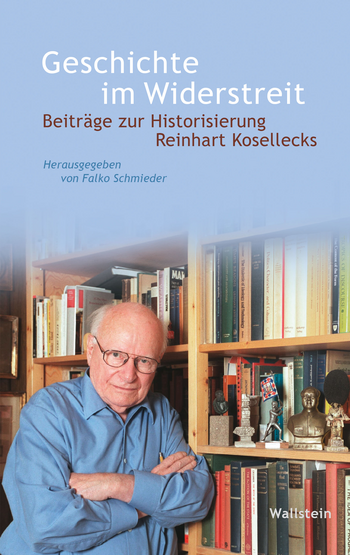
Anhand des Texts seiner sagenumwobenen Dissertation „Kritik und Krise“ wird der Ausgangspunkt von Kosellecks Denkweg zunächst als Rezeptionsvorgang von Schmitts Liberalismuskritik rekonstruiert und danach durch Kosellecks Verwendung der Begriffe „Liberalismus“ und „liberal“ in seinem Briefwechsel mit Schmitt kontextualisiert. Daraus leitet der Beitrag in seiner Schlussfolgerung den Vorschlag ab, Koselleck in politischer und analytischer Hinsicht als kritischen Liberalen einzuordnen, der Begriff und Geschichte des Liberalismus kritisch verarbeitete und dadurch an sie gebunden blieb.
The article takes up the current classification of Reinhart Koselleck as a liberal thinker and adjusts it by giving a new answer to the old but still hotly contested question of his relationship to Carl Schmitt. Based on the text of his legendary dissertation “Critique and Crisis”, the starting point of Koselleck's line of thought is reconstructed as a reception process of Schmitt's critique of liberalism as a first step and then contextualized through the uses Koselleck made of the terms "liberalism" and “liberal” in his correspondence with Schmitt. From this, the article derives its concluding proposal to classify Koselleck, in political and analytical terms, as a critical liberal who critically processed the concept and history of liberalism and thus remained bound to it.
Georg Simmerl ist Kulturwissenschaftler und politischer Theoretiker. Er leitet das DFG-Projekt „Strategien der Kritik. Eine systematische Rekonstruktion der Debatte um die documeta fifteen“ am Zentrum für Literatur- und Kulturforschung Berlin und lebt in München. Seine Forschungsschwerpunkte sind: Kultur und Ökonomie (insbesondere 19. Jahrhundert), Theoriegeschichte (insbesondere politökonomische Krisentheorien; Theorien des Liberalismus; Poststrukturalismus), Begriffsgeschichte (insbesondere „Kritik“, „Krise“ und „Liberalismus“) sowie die Analytik öffentlicher Debattendynamiken
mehr