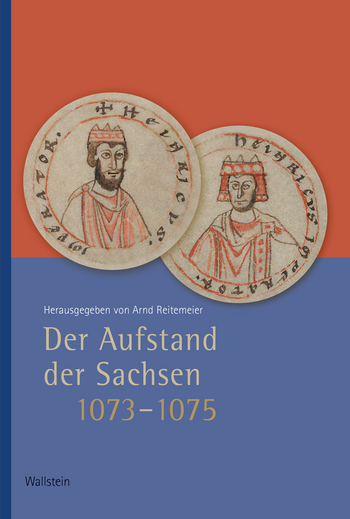


Im Zentrum steht die Abkehr von älteren Deutungen eines ethnisch oder territorial einheitlichen Volksaufstandes zugunsten eines komplexen Machtkonflikts zwischen Königtum, Adel und Kirche. Die Beiträge zeigen, dass der Aufstand nur im Zusammenspiel politischer Herrschaftspraxis, sozialer Bindungen, wirtschaftlicher Interessen und zeitgenössischer Kommunikationsformen zu verstehen ist. Besonders hervorgehoben wird die quellenkritische Analyse narrativer Überlieferung, die vereinfachende Deutungsmuster sichtbar macht und die Vielfalt von Loyalitäten und Handlungsspielräumen erkennbar werden lässt. Prosopographische, wirtschaftshistorische und erinnerungsgeschichtliche Ansätze ergänzen dieses Bild und verdeutlichen die Bedeutung individueller Biographien und regionaler Konstellationen. Insgesamt erscheint der Sachsenaufstand als dynamischer Prozess wechselnder Allianzen und Konfliktlagen, der durch situative Faktoren geprägt war. Der Beitrag unterstreicht damit die im Band gelungene Revision etablierter Forschungsparadigmen und die stärker differenzierende Betrachtung der hochmittelalterlichen Herrschaftskonflikte.
The paper surveys the research collected in the volume on the Saxon revolt of 1073–1075 and highlights the significance of the new reassessment of the conflict. It moves away from older interpretations of a unified ethnic or territorial popular uprising and instead presents the revolt as a complex struggle for power between the monarchy, nobility and church. The contributions show that it can only be understood through the interaction of political practice, social ties, economic interests and contemporary forms of communication. Particular attention is given to a source-critical reading of narrative accounts, which exposes simplifying patterns of interpretation and brings out the range of loyalties and possibilities for action. Prosopographical, economic-historical and memory-historical approaches add to this picture and emphasise the importance of individual biographies and regional contexts. Overall, the Saxon revolt emerges as a dynamic process of shifting alliances and conflicts shaped by situational factors. The paper thus underlines the volume’s successful revision of established research paradigms and its more differentiated view of high medieval power conflicts.